Furby wasn’t going to be my only new arrival. It was going to be a busy year.
Then came another call from a vet — and with it, the first real tension among the blind cats.
I’ll be honest: I enjoyed it. They were all kittens then, and they brought an energy to the house that even my older seeing cats seemed to appreciate. There were the occasional hisses, the well-aimed paw that would knock a kitten over, but overall it was one big, functioning family.
Hanna the dog fussed around them protectively, though she was ill by then and didn’t have much time left.
The new arrival became Podge — named mostly for the amount of food she could put away. She became close to Furby. Sooty was around but rarely joined in the games; excitement worsened her neurological condition, and her body would fold awkwardly, her legs failing her. So I kept her calm.
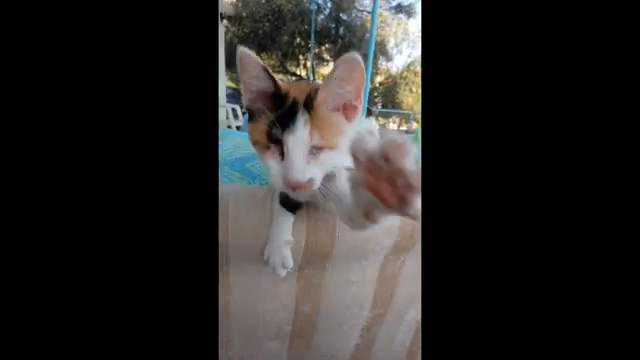
Blind kitten Podge arrived
William was never far away. He was spoilt for choice — so many cats, so much activity.
Up until then, every blind kitten had slotted in easily. But this boy was different. With his arrival, William changed. He took an intense dislike to him.
I never worked out exactly why — scent, nerves, something sensed — but the tension was constant. Cats, blind included, can detect fear or weakness, and dominant behaviour can follow quickly. If I see intimidation among the blind cats, I stop it. Among the seeing cats, it is harder. Prevention isn’t always possible.
William targeted him daily, until one day Loms — originally Little Man — fought back.
William thought he had him cornered and moved in confidently. Loms sank his claws into William’s face. William retreated, wounded in pride and flesh.
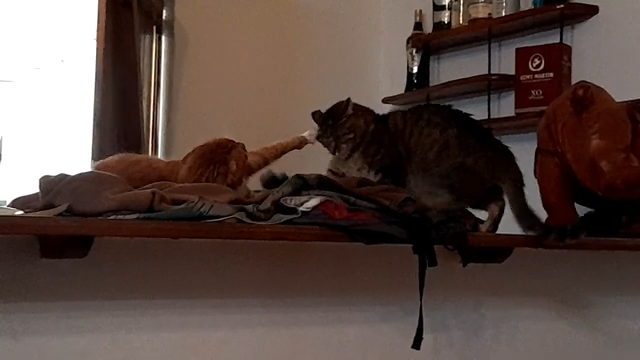
Payback for a bully – Loms fighting back
The balance shifted. After that day, it was over.
Other than that, life was calm. The cats played, but I was beginning to notice something else about the blind cats.
They were not just climbers. They were explorers.
In winter, when the garden becomes dense and overgrown, it turns into a natural playground. But their curiosity extended beyond the garden.
I live on a mountain. There are no predators here, so walking is safe, and I go whenever I can.
One morning, Podge followed me to the front gate. I picked her up and carried her up the road to the path. If she panicked, I could bring her back. But she didn’t.
I put her down and walked slowly. She followed, sniffing everything. As we climbed, she kept stopping and looking behind her. I couldn’t see anything, but she could smell or hear something I couldn’t.
It was Ninja — my neighbour’s cat, clearly bored and curious.
Podge ran and played on the mountain with a seeing cat that wasn’t even one of mine. Again, the narrative proved incomplete. Blind cats can be outside — supervised — and they can socialise freely.
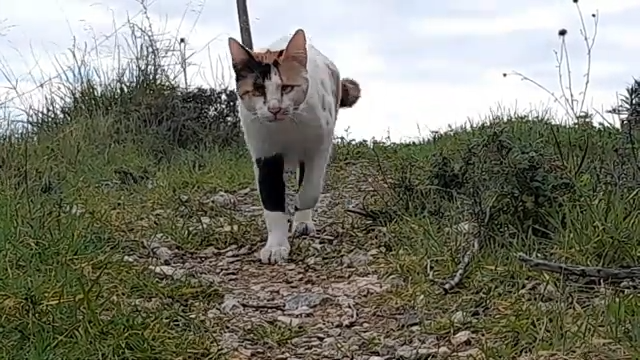
Blind cat Podge, first time on the mountain
I sometimes wondered whether much of the cautionary advice originated in places where the risks are very different. In North Cyprus, we have one dangerous snake — and it is endangered.
I filmed Podge and Ninja together. The video is on YouTube.
It was becoming clear to me that blind cats had been placed in a box labelled “Special Needs,” and inside that box was a fixed list of rules. It had been accepted because nobody had tested it differently.
But I was learning that blind cats were special — not special needs — and that every situation is different.
The label had stayed on for too long.
It was time to lift the lid.
And my cats — all of them — were going to help.
But sadness was never far away.