February 2019. There was a post on Facebook. Two kittens in a crate, looking out of a metal grill. They were brothers & both blind. The owner didn’t know what to do. They needed help and a home. I live in North Cyprus, I had cats, all were rescues, but I had no idea about blind cats. Up until that morning, i’d never even one.
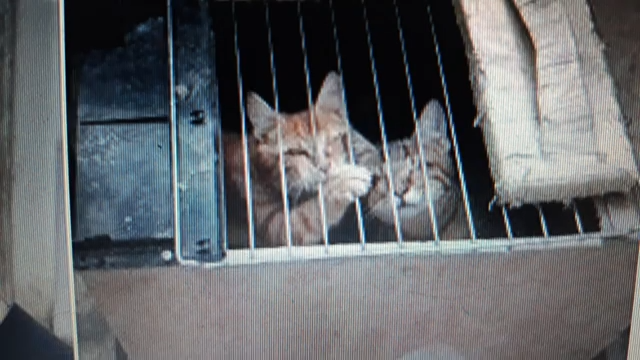
It was a gut feeling, a voice that came into my head, “You can help”. There was already talk online of splitting them if need be, possibly sending them to Germany, so I stepped in and said I will take both. They were in Lefkosia, calls were made, and I now had two blind kittens coming home, so what to do. The two blind kittens were one thing, but it’s what came next where this story really begins.. .
Online support & care for blind cats back in 2019 was grim & negative, so much so, that later, I got to calling it the negative narrative. I came offline after my first search that morning, feeling sad & depressed that I couldn’t give these two kittens a life, because there was nothing to look forward to. They were classed as Special Needs, and had no chance of any sort of life. All that I could find started with the words, “Don’t do” or “Don’t let” and that was it. A long checklist of Dont’s.
I needn’t have worried. When the boys arrived, they had other ideas. The first indication was my bed. After stepping out to let them get used to the new digs, I came back in to find them playing on my bed. The next, was when one of them walked to the edge of the duvet, front paws out, swung himself around, facing the bed, lowered himself down to the floor using his paws & claws, trotted over to the litter tray, climbed in on his own, did a wee, climbed back out, trotted back over to my bed, climbed straight back up & carried on playing with his brother, and me standing there looking like a goldfish, lips moving, no words coming out. That was the first hour, there was more to come.
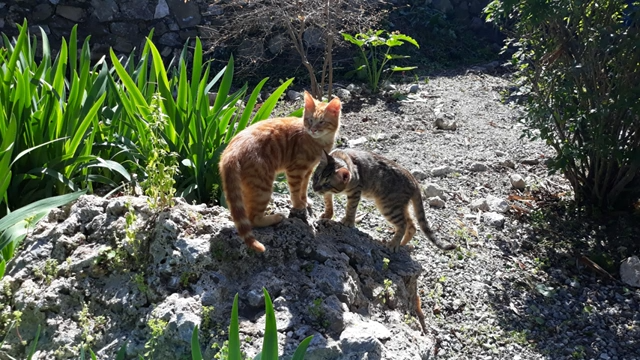
One morning, I made a mistake. Working in the garden i’d forgotten to shut the door. I was sitting, taking a beak when two heads appeared. Cautiously they came out, sniffing the air, the ground. They weren’t in any danger, and I was curious. Nothing i’d seen in the past month bore any resemblance to the online care I had read. Slowly they went forward, past the lemon tree into the garden. About 3m in, there is a small natural rock that tapers at one end, and they found it. The camera was out by now, and what came next changed our lives forever. They played, they were explorers, adventurers, climbers and when they grew tired, they found a spot by the rock, half in the sun and layed down and went to sleep. I knew at that moment that the blind cat care narrative had got it all wrong. There was a story to tell, wrongs to put right and it was was blind cats that had to do it, with a little help from a friend
In 2022, I started a YouTube channel for them, to show their lives in video. It’s called Blind cat life with friends. In 2026 the website came along, blindcatlifewithfriends.com
This website is about my amazing blind cats, who have rewritten the blind cat playbook and turned their disability into an ability to live their lives as cats…with their seeing cat friends, and one very proud cat dad.